
Creative and Accessible Mental Health Support for Youth Across Ontario.
What to Expect in an Art Therapy Session
Art therapy is not about making “good” art! It’s about using creative expression as a way to better understand yourself, your emotions, and your patterns of thinking. In a session, you might be invited to use a variety of materials such as paint, markers, collage, clay, or simple drawing tools. The focus is not on technique or artistic skill, but on the process of creating.
You’ll typically be given an art directive or prompt, which is simply a starting point to help explore a feeling, experience, or challenge. There is never a “right” or “wrong” way to respond. Whatever you create is valid, and your work is explored with curiosity rather than judgment.
Art becomes a way to express what can sometimes be hard to put into words. It can help uncover underlying thoughts or self-narratives that may not feel helpful or accurate, and open space for new perspectives. Over time, this process can support the development of healthier coping strategies, stronger emotional awareness, and a more compassionate relationship with yourself.
In art therapy, the artwork is not the end goal but the insight and growth that come through creating!
Meet Your Therapist
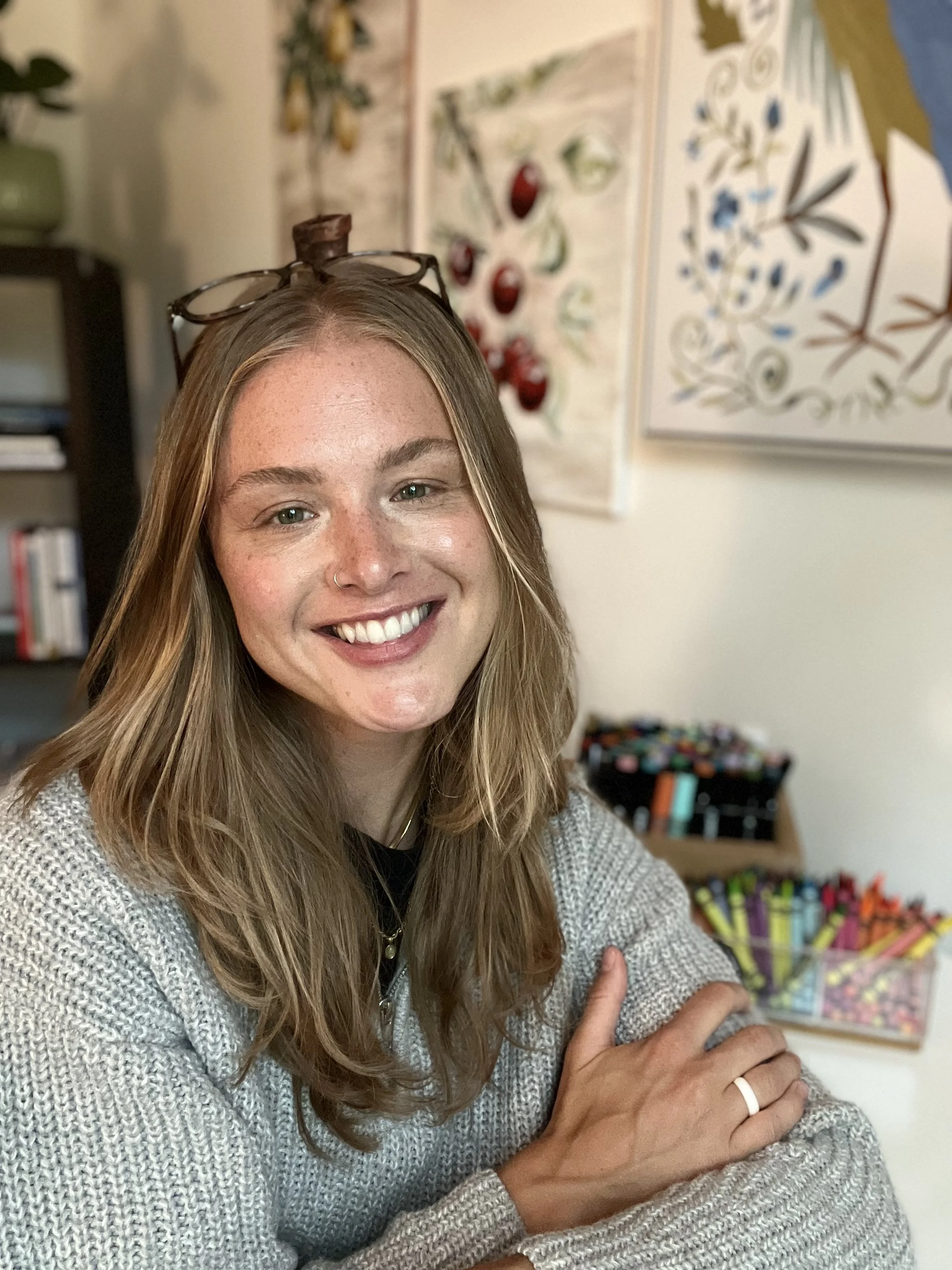
Madeline is a Registered Psychotherapist and graduate of The Toronto Art Therapy Institute, where she completed her research and thesis exploring art therapy and self-efficacy in youth within live-in addiction treatment settings. Her academic work reflects a strong clinical interest in how creative expression can support confidence-building, emotional regulation, and long-term recovery in young people facing complex mental health challenges.
With over nine years of experience in the mental health field, she has worked across a range of settings including post-secondary institutions, inpatient youth treatment programs, family therapy services, and private practice. This diverse background has shaped a grounded and flexible therapeutic approach, allowing her to meet clients where they are while tailoring support to individual needs and goals.
Her clinical practice is primarily informed by Emotion-Focused Individual Therapy (EFIT) and Dialectical Behaviour Therapy (DBT), while also maintaining a strong commitment to person-centred, client-led care. She believes therapy should be collaborative and empowering, supporting individuals in developing practical skills alongside deeper emotional understanding.
She is passionate about helping clients build confidence, strengthen coping strategies, and develop a more compassionate and stable sense of self as they navigate life’s challenges. Her work is rooted in the belief that meaningful change comes from both insight and skill-building, and that every person has the capacity to grow, adapt, and create a life that feels more manageable and fulfilling.
Outside of her clinical work, she enjoys spending time outdoors mountain biking and skiing, and finds grounding and joy in being with her animals.
Teens, Art Therapy, and Self-Efficacy Development
Self-efficacy is the belief in your ability to handle challenges and influence your own life. and is a key foundation for confident, resilient youth. When young people trust that they can cope, problem solve, and make meaningful choices, they’re better equipped to navigate stress, relationships, and the ups and downs of growing up.
Art therapy is a powerful way to build this sense of self-efficacy. Unlike traditional talk-based approaches, it gives youth a hands-on, creative way to explore their inner world. Through art-making, they can express thoughts and emotions that may be hard to put into words, helping them better understand themselves and their experiences.
One of the most impactful aspects of art therapy is the opportunity for mastery and accomplishment. Completing a piece of art, no matter how simple can create a sense of “I did that.” These small, repeated experiences of success help shift internal beliefs from “I can’t handle this” to “I can figure things out.” Over time, this builds confidence that extends beyond the therapy space.
Art therapy also supports emotional awareness and regulation, both of which are essential for self-efficacy. When youth can identify what they’re feeling and understand why, they’re more able to respond intentionally rather than react impulsively. Creative processes like choosing colours, shaping images, or reworking a piece can mirror this ability to make choices and adjust, reinforcing a sense of control.
Another key piece is autonomy. In art therapy, there is no “right” way to create. Youth are encouraged to make their own decisions, take risks, and explore freely. This helps strengthen their sense of agency; the understanding that their voice, preferences, and choices matter.
Art therapy also creates space for rewriting personal narratives. Through images and symbols, youth can explore how they see themselves and begin to shift those stories toward ones that include strength, resilience, and growth. Seeing these changes visually can make the process feel more real and accessible.
When combined with skill-based approaches like DBT, art therapy becomes even more powerful. Youth aren’t just learning coping strategies, they’re practicing them in real time in a way that feels engaging and natural. This reinforces the belief that they can use these tools outside of therapy as well.
Ultimately, art therapy helps youth move from feeling overwhelmed or stuck to feeling capable and in control. By building self-awareness, encouraging choice, and creating opportunities for success, it supports the development of a strong, lasting sense of self-efficacy that youth can carry with them into all areas of their lives.
Madeline Lass
June 2025